





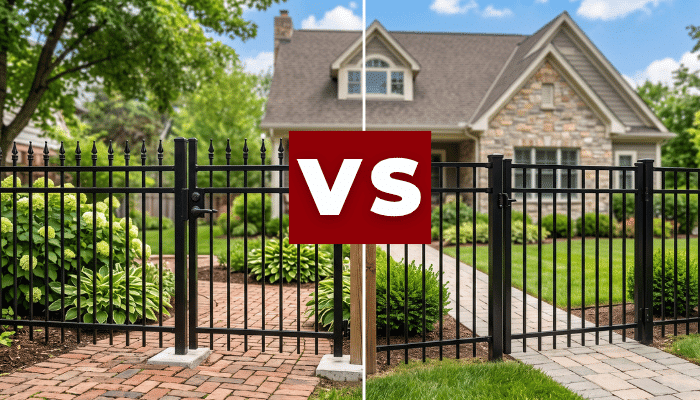
If you're after the clean, upscale look of a metal fence, two materials rise to the top: aluminum and steel. Both give you that crisp, defined boundary that boosts curb appeal, and both far outlast a basic wood fence. But they behave very differently once Georgia's heat, humidity, and lake-area moisture get involved — and they sit at different price points. This guide breaks down how steel and aluminum compare on durability, maintenance, cost, and security, so you can choose the right one for your property with confidence.
Steel vs. Aluminum Fencing at a Glance
| Feature | Aluminum Fencing | Steel & Wrought-Iron Fencing |
|---|---|---|
| Strength | Strong for residential use | Significantly stronger; harder to damage |
| Rust resistance | Excellent — won't rust | Good with proper coating; can rust if the finish is breached |
| Maintenance | Very low; occasional rinse | Low, but watch for chips and scratches over time |
| Weight | Lightweight, easy to work with | Heavy and substantial |
| Cost | More budget-friendly | Higher upfront investment |
| Best for | Curb appeal, pools, pets, decorative lines | Security, high-traffic areas, a premium custom look |
| Lifespan | Decades with minimal upkeep | Decades; longest life when the finish is maintained |
Aluminum Fencing: Pros, Cons, and Best Uses
Aluminum fencing is the go-to choice for homeowners who want the ornamental-metal look without the upkeep. Because aluminum doesn't rust, it's especially well suited to Georgia's humidity and to properties near water — around Lake Acworth, Lake Allatoona, and backyard pools, where moisture is constant.
Where aluminum shines:
- Curb appeal with almost no maintenance — a factory powder-coat finish keeps its color for years, and upkeep is usually just an occasional rinse.
- Pool and safety fencing — lightweight, rust-proof, and available in code-friendly designs (more on that in the FAQ).
- Sloped and uneven yards — aluminum panels rack to follow grade changes, which is handy on Georgia's rolling lots.
- Pets and decorative boundaries — a clean look that defines the yard without walling off the view.
The trade-off: aluminum is strong enough for virtually any residential use, but it isn't as impact-resistant as steel. For heavy-duty security or commercial perimeters that take real abuse, steel is the tougher pick.
Steel & Wrought-Iron Fencing: Pros, Cons, and Best Uses
Steel and wrought-iron fencing is the strongest metal option we install. It carries a substantial, timeless, custom feel — and it can take impacts and pressure that would dent lighter materials. If security or a high-end statement is the priority, steel delivers.
Where steel shines:
- Security and durability — the top choice for perimeters, driveway gates, and anywhere strength matters most.
- A premium, custom look — heavier profiles and ornamental detailing read as high-end from the street.
- High-traffic and commercial settings — stands up to daily wear where a lighter fence would fatigue.
The trade-off: steel's one vulnerability is rust. Modern steel fencing is coated to resist corrosion, but if that finish gets chipped or scratched and goes unaddressed, Georgia's humidity can start rust at the exposed spot. Keeping the finish intact — and touching up nicks promptly — is what gives a steel fence its long life. It's also the higher upfront investment of the two.
Which Holds Up Better in Georgia's Climate?
This is where a lot of Georgia homeowners land on aluminum. Our summers are hot and humid, and moisture is the enemy of any metal that can rust. Aluminum simply doesn't corrode, so it's the lower-worry option in humid, lakeside, and poolside settings.
Steel absolutely performs well here too — the key is the protective finish. A quality-coated steel fence that's installed correctly and touched up when it gets dinged will last for decades. Neglect the finish, and humidity will eventually find any exposed metal. So the honest climate answer is: aluminum is the most forgiving in Georgia moisture, while steel rewards a little ongoing attention with unmatched strength.
If you're weighing metal against a budget option, our guide on aluminum vs. chain-link fencing is a useful companion read.
Cost and Value: What to Expect
Aluminum is generally the more budget-friendly of the two, while steel commands a higher price for its added strength and heavier build. That said, the right choice isn't always the cheaper one — it's the material that matches how you'll use the fence. Paying more for steel makes sense when security is the goal; spending less on aluminum makes sense when low-maintenance curb appeal is what you're after.
Every project is different, so we provide a free written estimate for your exact property. See what goes into pricing on our fencing costs page, and remember that every written quote is backed by our price-match guarantee. If you'd like to spread the investment out, financing is available on approved credit.
How to Choose Between Steel and Aluminum
Use this quick decision guide:
- Choose aluminum if you want the lowest maintenance, you're fencing a pool or a lakeside/high-humidity yard, your lot is sloped, or curb appeal and value are the priorities.
- Choose steel if security is your top concern, the fence will take heavy daily use, or you want the most substantial, premium ornamental look and don't mind occasional finish upkeep.
Still torn? That's exactly what a free on-site consultation is for. We'll look at your property, your goals, and your budget and point you to the right fit — and you can browse both options and everything else on our fencing styles page.
Frequently Asked Questions
For most Georgia homes, aluminum is the better all-around choice because it never rusts, needs very little maintenance, and handles humidity and poolside moisture with ease. Steel is the better pick when security and maximum strength are the priority and you don't mind occasional finish upkeep.
No. Aluminum does not rust, which is why it performs so well in Georgia's humid climate and around lakes and pools. Its powder-coated finish also resists fading, so it keeps its look for years with minimal care.
Steel is significantly stronger and more impact-resistant than aluminum, making it the top choice for security and high-traffic or commercial settings. Aluminum is still plenty strong for typical residential use like pools, pets, and decorative boundaries.
A steel fence is worth the higher cost when you need serious security, heavy-duty durability, or a premium custom look. If low maintenance and curb appeal matter more than maximum strength, aluminum delivers most of the visual benefit at a lower price.
Aluminum needs the least maintenance — usually just an occasional rinse, with no rust and no repainting. Steel requires a bit more attention to keep its protective finish intact and to touch up any chips before humidity can start corrosion.
Aluminum is typically the best metal fence for pools because it's rust-proof and available in code-compliant safety designs. Be sure any pool fence meets Georgia's requirements — see our guide to pool fencing requirements in Georgia for the details.
Whether you land on the low-maintenance ease of aluminum or the strength of steel, Spectrum Fence installs both across metro Atlanta and North Fulton. Call 770-367-2925 or request your free quote and we'll help you choose the right metal fence for your property.