





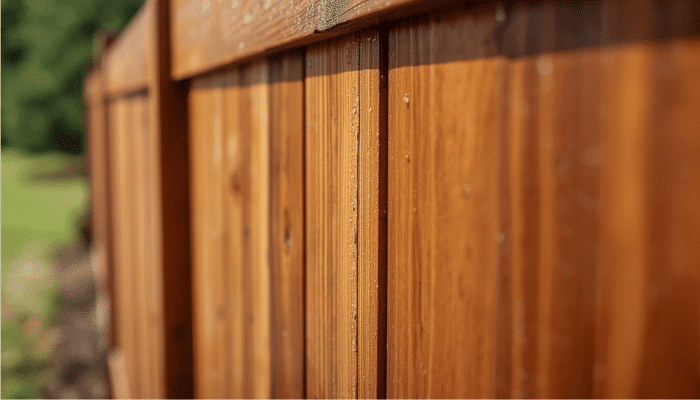
If you've got a wood fence in the North Fulton County area, you already know Georgia doesn't make it easy on outdoor wood. Between the summer humidity, heavy pollen seasons, and the freeze-thaw swings we get from December through February, an unprotected wood fence can start showing wear a lot faster than homeowners expect. The good news is that a consistent staining and sealing schedule can add years to a fence's life — you just have to know what "consistent" actually means for this climate.
How often should you stain or seal?
For most cedar, pine, and spruce fences in the Atlanta metro area, plan on restaining or resealing every 2 to 3 years. That said, a few local factors can shorten that window:
- Full sun exposure. Fence lines that get direct afternoon sun for most of the day will fade and dry out faster than shaded sections. Those spots may need attention closer to the 2-year mark.
- Sprinkler overspray or low-lying yards. If your fence sits near an irrigation zone or a part of the yard that holds water after storms, moisture exposure adds up quickly and can accelerate breakdown.
- New wood vs. older wood. A brand-new fence should get its first coat within 2 to 3 months of installation — not immediately, since the wood needs time to dry out and accept stain properly.
Signs your fence needs attention sooner than scheduled
Rather than going strictly by the calendar, it helps to know what to look for:
- Water beading has stopped — if rain soaks straight into the wood instead of pooling on the surface, the sealant has worn through.
- Graying or fading color, especially on south- and west-facing sections that catch the most sun.
- Small cracks or splintering starting to appear on the surface of the boards.
- Visible mildew or dark spotting, particularly in shaded, humid corners of the yard.
Catching these early is the difference between a routine refresh and a full board replacement.
Why staining matters more here than in drier climates
Wood is porous, and in a climate as humid as ours, that's exactly the problem. Without a protective coat, wood fencing absorbs moisture from rain, dew, and humidity swings, which leads to warping, rot, and eventually structural failure at the posts and rail connections. A quality stain or sealant creates a barrier that sheds water instead of soaking it in, while also blocking UV damage that dries out and fades the wood over time.
Getting it done right
Staining a fence properly involves more than a quick coat of product. At Spectrum Fence, our staining and painting process starts with thorough surface prep — cleaning, repairing any damaged boards, and letting the wood dry completely — before applying a premium finish built to hold up against Georgia's weather. If you're due for a refresh or you're not sure whether your fence needs a full restain or just a touch-up in a few sun-exposed sections, we're happy to take a look and give you a straight answer.
And if you're planning a new wood fence installation or considering a low-maintenance capped alternative that cuts down on how often you'll need to reseal, our team can walk you through the capped privacy fence option as well.
Ready to get your fence back to looking its best? Contact us for a free estimate, or ask about our current financing options if you're planning a larger refresh across your property.